
The success factors of sustainable food innovation: sustainability must be in your DNA
CHANGE INC, By editor Maaike Kooijman, published 2 January 2026
From beet-based steaks to pea milk, from hybrid meat to rescued-vegetable soup: every year, countless new sustainable products find their way onto supermarket shelves. But how does such a food innovation come about, and how do you successfully bring it to market? Expert Mary van Hoek-Hendriks has written a book on the subject.
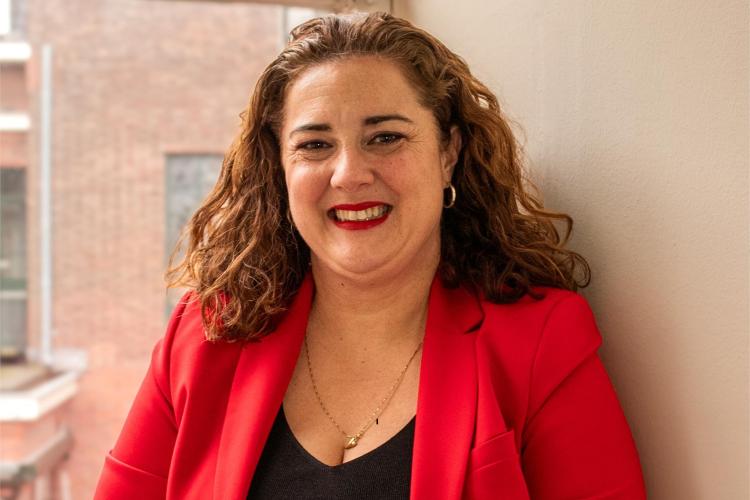
Food innovation, Mary van Hoek-Hendriks knows, is about much more than launching a new product. Sometimes it means wanting to change the entire food chain. A good example is Minke and Peter van Wingerden, who realised the world’s first floating farm. Floating Farm in Rotterdam aims to enable local, healthy food production in urban areas. Thanks to its location on the water, the farm is resilient to droughts and flooding. Moreover, it operates circularly, for example by feeding its cows with residual streams from the city.
Another example is the Groente & Fruitbrigade (Fruit & Veggie Brigade for Food Banks), a project in which Van Hoek-Hendriks herself was involved as a board member. This foundation has set up a nationwide system to rescue surplus and donated fruit and vegetables from waste and distribute them to food banks. Through ‘fresh hubs’ in the Westland, the Flevopolder and Limburg, millions of kilos of fresh produce have already been delivered to people struggling to make ends meet.
“I want to broaden the image of what an innovator is,” says Van Hoek-Hendriks. “They are not just people who develop products for supermarkets. They are also the ones introducing entirely new product categories, such as cultivated meat, or new practices.”
Food innovation: providing knowledge and insight
After completing a Master’s degree in Food Technology, Van Hoek-Hendriks has always worked in food innovation. She was involved in product development at companies such as Peijnenburg and Sligro. In 2012, she moved into education at HAS University of Applied Sciences (now HAS green academy), the first university of applied sciences to offer a bachelor’s programme in Food Innovation, co-developed by Van Hoek-Hendriks. Two years ago, she left education to start her own food innovation consultancy.All the knowledge she gained in both industry and education is brought together in Mastering Food Innovation, which she self-published this year. The book includes not only essential theory and fifty food innovation tools, but also detailed case examples.
I want to broaden the image of what an innovator is. They are not just people who develop products for supermarkets. They are also the ones introducing entirely new product categories, such as cultivated meat, or new practices.
Innovation is crucial in every company
When asked how a good innovation idea comes about, Van Hoek-Hendriks laughs. “A good idea in itself is worth nothing,” she corrects. “It’s about a well-executed idea. You need market potential, funding and a strong team. Especially in the concept phase, collaboration is a key success factor. If you go alone, you go fast, but together, you go further. It’s a cliché for a reason.”
According to her, the best ideas often arise when the status quo is no longer an option, for example due to high gas prices. “Then you simply have to come up with something else.” This often requires more creativity than ideas driven purely by the desire for higher turnover, although the two do not exclude each other. Innovation is crucial for every company simply to survive, says Van Hoek-Hendriks. She therefore advises organisations to create space for people who are allowed to experiment and break the rules. “You can’t give them a KPI.” Some large companies choose to set up independently operating innovation teams, such as Albert Heijn’s now-discontinued Food Rebels.
Testing as a success factor
After the (potentially brilliant) idea come the thinking, testing and actual execution. A food innovation typically develops through five phases: exploration, ideation, development, market introduction and evaluation. Van Hoek-Hendriks refers to this as the Food Innovation Journey. The further you progress on this journey, the more complex it becomes. “Suddenly you also have to think about timing and shelf placement. Each layer of complexity involves dozens of decisions. Three wrong choices and you’re out, so to speak.” How do you know which choice is the right one? Van Hoek-Hendriks strongly emphasises the importance of testing innovations, not through online surveys, but by testing “at the counter”. In other words, in the context in which the innovation will actually be used. “It can be as simple as putting three bowls of different snacks on the table at a party and seeing which one gets eaten the most.”
The most important thing, she concludes, is “to get away from your desk”. “As an innovator, you can use AI for many things, from calculating recipes to analysing price elasticity. What once required visiting three trade fairs can now be done online. But if you really want to know how people respond to your idea, you have to be there in person. That’s also how you build support.” Testing innovations is not always easy, she admits, but there are plenty of examples. One is Mona Dessert of the Month. “Normally, supermarket products are bound by strict requirements, from price and ingredients to packaging dimensions. But Mona managed to secure a space that could be redesigned every month, inspired by customer ideas. This gives them insight into what consumers want, while generating valuable sales data to see what performs well.”
Multidisciplinary teams for smooth communication
Another major challenge is communication with the eventual producers of a product. At Peijnenburg, for example, Van Hoek-Hendriks worked on reducing sugar in gingerbread. “That’s a logical step, but for bakers it meant a completely different way of working. What feels like just another snack to consumers can feel like a major innovation for a company.” Factory employees are not always keen on change either, especially when it threatens production targets. “Innovation and operations work in different ways and are judged on different criteria,” she explains. Communication becomes easier with multidisciplinary teams. “Or the innovator must speak the language of both office staff and factory workers,” says Van Hoek-Hendriks. “In innovation, it’s crucial that your relationship with the cleaner is just as good as with the director. The people on the ground are the ones who will ultimately have to implement your idea. In conversations with them, it always helps to understand their interests.”
It’s far more convincing when sustainability is in your DNA. When you don’t have to say it, but it’s evident in everything you do, that’s when you truly have a strong story
Sustainability as an economic advantage
Van Hoek-Hendriks does not focus exclusively on sustainability, although it is clearly one of the key developments in the food sector. How does she view sustainable innovations? “In essence, they don’t differ that much from other innovations,” she believes. “An economic advantage is always a crucial success factor for long-term viability. For example, if a meal producer can combine two cooking steps, it saves energy and time and therefore money.”
Groente & Fruitbrigade won the jury award at Duurzame Dinsdag in 2024. “Interestingly, I didn’t mention the words ‘sustainable’ or ‘healthy’ once in my pitch to the jury,” Van Hoek-Hendriks laughs. “It’s far more convincing when sustainability is in your DNA. When you don’t have to say it, but it’s evident in everything you do, that’s when you truly have a strong story.”
The original article in Dutch was published on 2 January by Change Inc.

💡Curious how purpose-driven food brands grow without losing their soul? In Mastering Food Innovation, I share the frameworks and insights I have used to help leading social food ventures scale with impact. Order your copy here.
If you want strategic guidance on building meaningful, commercially strong food concepts, I, Mary van Hoek-Hendriks, would be happy to support you. mary@startafoodstory.com