10 Years of Food Changemakers & Food Heroes
By Mary van Hoek-Hendriks, May 2026, photo’s by Nina Slagmolen, Oene Sierskma and myself
The Netherlands’ national FOOD100 list celebrates the country’s most influential food innovators and changemakers working towards a better food system. Last month, registrations for the 10th edition of FOOD100 officially opened. A special moment. Not only because this is an anniversary edition, but because over the past decade this list has evolved from an inspiring selection of names into a genuine movement within the Dutch food system.
For international readers unfamiliar with FOOD100: it is the Netherlands’ national platform recognising one hundred individuals who are actively shaping the future of food. Entrepreneurs, farmers, scientists, chefs, investors, campaigners, policymakers and innovators who contribute to a more sustainable, healthier and future-proof food system.
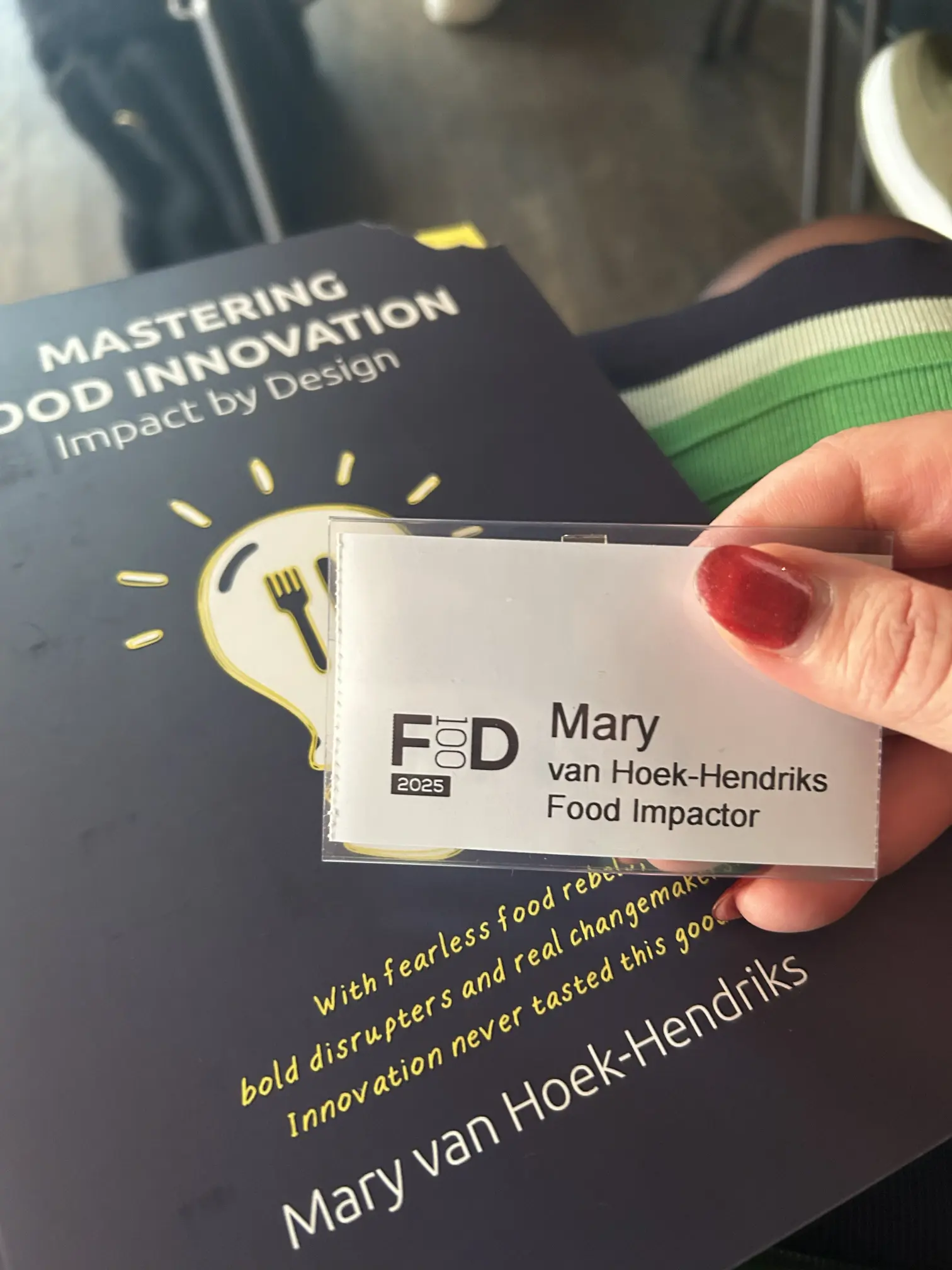
I have been involved since the very first edition as a talent scout, ambassador, speaker and early contributor. This year, for the first time, I am stepping into the role of jury member. And precisely because of that, I decided to dive deep into all previous editions, candidates, food heroes, jury members, roles and organisations. What started as curiosity turned into a fascinating analysis of almost ten years of food transformation in the Netherlands. And believe me: FOOD100 tells a story far bigger than simply who made “a list.”
Why FOOD100 Was Created in the First Place
Over nine years, FOOD100 featured over 900 people. Some names appear remarkably often. Record holders with five to six appearances include Chloé Rutzerveld, Johan Leenders and Welmoed Deining. That says something important. Impact is not a one-time peak. It is a long-term contribution to systemic change. When FOOD100 was founded in 2017, the starting point was clear: connecting talent with influence. The list consisted of fifty changemakers under the age of 30 and fifty gamechangers above 30. The idea behind it was simple but powerful. Young talent bursts with ideas and energy, while experienced professionals often have the networks, resources and execution power to create scale. Bringing those worlds together creates acceleration. Over time, however, the line between young and old has become increasingly blurred. Since 2022, the age limit for young changemakers was raised to 35, but reality shows that innovation is essentially ageless. Young entrepreneurs inspire established players just as much as the other way around. Many experienced professionals have also reinvented themselves as pioneers, often through startups, social initiatives or regenerative concepts. FOOD100 gradually became less about generations and more about a network of possibilities.
Not a Ranking, but a Movement
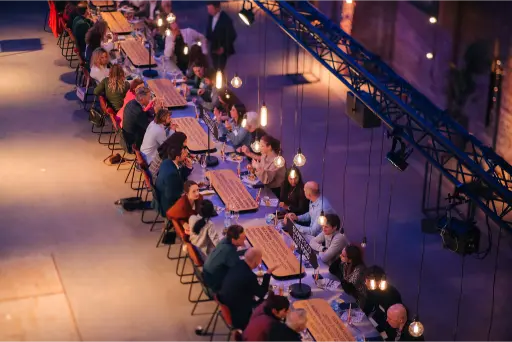
What distinguishes FOOD100 from many other lists is that it is explicitly not a competition. No Top 10. No Number 1. No hierarchy. The list is organised alphabetically and represents a current selection of one hundred food changemakers working towards a more sustainable food system. That fundamentally changes the dynamic. In the early years, the list mainly served as an inspiring “who’s who” overview. But over time, something far more valuable emerged: connection. Food changemakers found each other, collaborated, shared knowledge, started projects, built friendships and amplified each other’s impact. FOOD100 stopped being a list and became an ecosystem.
The Annual Food Honours
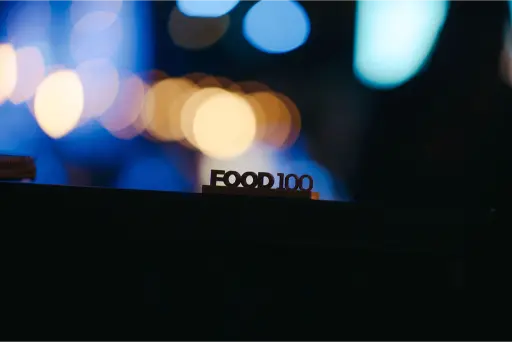
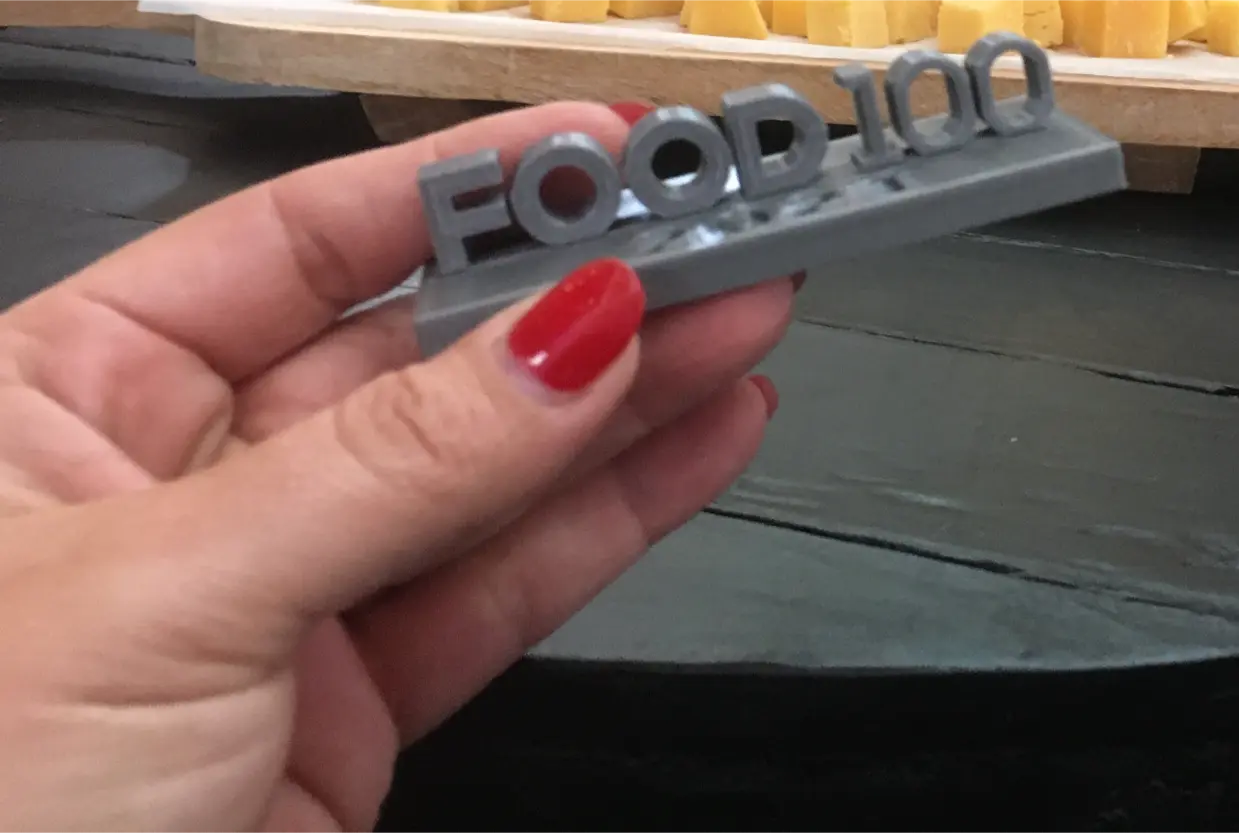
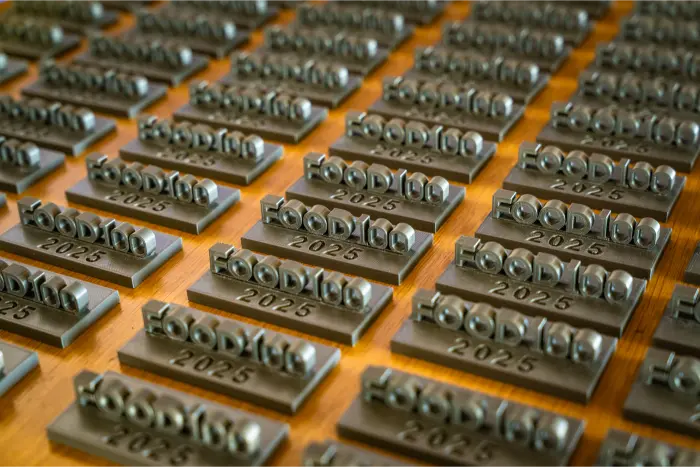
Perhaps that is why FOOD100 increasingly feels like the annual honours ceremony of the food world. Traditionally, Dutch culture tends to value modesty, but FOOD100 breaks through that pattern. It makes visible what would otherwise remain invisible. People who quietly spend years building a better food system are given recognition and a platform. The iconic 3D-printed ornament has therefore become much more than a trophy. It symbolises perseverance, creativity and action. For many, it is a physical confirmation of years of pioneering, often against the current. And perhaps even more importantly: it gives others hope and inspiration to step forward and create change themselves.
Who Is Still Missing?
Precisely because I have followed the list so closely, the major absentees also stood out to me.
#Food Banks
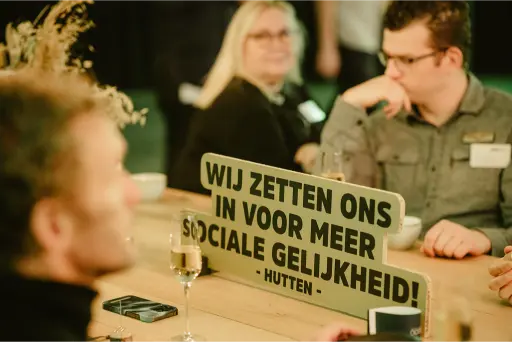
More than 14,000 volunteers dedicate themselves every day to tackling food poverty. Volunteers who work tirelessly, without much noise or self-promotion, to improve food security and social impact. The classic Dutch mentality of “just get on with it.” These are people who rarely put themselves in the spotlight, yet play a crucial role in the food system. That is why I hope we will see more food bank volunteers, social food initiatives and organisations such as De Pastabende, Groente & Fruitbrigade and Soupalicious featured in future editions.
#The Enablers
Incubators, hubs, accelerator programmes and communities that guide startups. Not the standard business coach, but the mentor who celebrates successes, absorbs disappointments and keeps entrepreneurs standing when things get tough.
#The Financial Changemakers
Impact investors, business angels and funds that make food innovation possible. They often consciously operate outside the spotlight, while their courage determines which innovations get the opportunity to grow. Perhaps this is where the next evolution of FOOD100 lies: recognising not only the visible innovators, but also the infrastructure behind them.
What Makes Someone a Food Hero?
Every year, FOOD100 appoints several food heroes. Not winners, but substantive anchors within the list. People who demonstrably accelerate systemic change.
A food hero is someone who not only comes up with ideas, but actually sets them into motion. Someone who brings others along, inspires them and scales impact beyond their own organisation.
Of the 58 food heroes so far, more than half are entrepreneurs or founders. In addition, we see farmers, chefs, campaigners, professors and youth representatives. What connects them is not their job title, but their ability to make change tangible. One remarkable fact: more than 90% of all appointed food heroes are still active within the food domain today. That says a great deal about the intrinsic motivation of this group.
Of the 58 food heroes so far, more than half are entrepreneurs or founders. In addition, we see farmers, chefs, campaigners, professors and youth representatives. What connects them is not their job title, but their ability to make change tangible. One remarkable fact: more than 90% of all appointed food heroes are still active within the food domain today. That says a great deal about the intrinsic motivation of this group.
Who Sits on the Jury?
From every corner and hidden layer of the food landscape, jury members are recruited to review the enormous number of applications. The number of submissions varies between 300 and 600 every year. Each year, six to eight jury members are selected, many of whom have previously appeared in FOOD100 themselves. Some jury members return for multiple editions. How exactly does this process work? Do they unanimously agree on everything, or do heated debates erupt behind closed doors? I will be able to tell you more once the results are announced. This year, I will experience it firsthand as a jury member for the very first time. Out of the total 31 jury members involved over the years, around 67% had previously been featured in the list themselves. Nearly half had also once held the title of “Food Hero of the Year.” Where do these jury members come from? I analysed their profiles. The jury is a colourful mix of sustainability advisors, social innovators, entrepreneurs, farmers, media and communication professionals, professors, a flavour professor, a politician and professionals from foodservice and wholesale. This year, I have the pleasure of serving alongside Rahaf Al Lymoni, Sheila Struyck, Herman Lelieveldt, Bas Turk and Anouk Snelders. I am very much looking forward to it.
What Does the Jury Look For?
All applications, whether you nominate yourself or someone else, are evaluated against four parameters. Everyone counts. The process takes place in two assessment rounds. Based on all submissions, a longlist is first compiled. During the first jury meeting, each jury member nominates a personal Top 20 based on their own expertise. During the second jury meeting, shortlisted candidates are assessed by all jury members using a points system based on four criteria.
#1 Execution Power: The degree to which the candidate succeeds in actually realising goals.
#2 Innovativeness: The extent to which the candidate demonstrates innovation and acts as a role model.
#3 People, Planet, Profit: The degree of broad sustainability thinking within the agri-food sector.
#4 Sharing: The ability of the candidate to share knowledge, networks and insights with others.
What FOOD100 Reveals About the Future of Food
By analysing nine years of FOOD100 data, including all candidates, roles and organisation types, I discovered interesting patterns leading up to the 10th FOOD100 edition. During this period, the Dutch food landscape changed significantly as well. What have been the biggest shifts? For a while, we thought Covid would permanently transform the food system. Today, little evidence of that remains. The pandemic did not fundamentally change the food system, but it certainly accelerated existing vulnerabilities and made them more urgent. I see three major shifts:
#1 From Sustainability to Measurable Impact
It is no longer just about what products a company makes, but how they are produced and what impact they have on climate, health and supply chains. The sustainability manager is no longer a side role within marketing or communications, but a fully-fledged member of the executive team. Companies are increasingly judged on their role within the system, not merely on their products. The underlying shift is from product thinking to systems thinking. This mindset fits the younger generation particularly well. Young people rarely begin with: “I want to create a new product.” Instead, they say: “I want to fix something within the food system and be part of something bigger.” Their starting point is problem-driven.
#2 The Clash Between Ideals and Reality
The rise (2015–2021), boost (2020–2021) and decline (2022–2026) of short supply chains. Many short-chain concepts, farm shops, subscription boxes, local sourcing platforms, food collectives and locally sourced hospitality concepts, emerged, operated for a few years and eventually disappeared because consumers still prioritise price and convenience. Yet several lasting elements remain: farm shops, cooperative models and increased awareness around food origin.
#3 “Something with Protein”
The protein transition may sound simple, eat more plant-based foods, but underneath the surface it is one of the most complex systemic transformations in food. The protein transition is not simply about replacing meat. It is about redesigning an entire system where agriculture, industry, technology and consumer behaviour intersect. To truly understand it, you need to break it down into three layers: products, industrial systems and agriculture. Interestingly, all three layers are strongly represented within FOOD100.
The Food Changemaker of the Future
Will our purchasing and eating behaviour radically change over the next ten years? Probably not. Ten years from now, we will still shop at supermarkets and have part of our groceries delivered to our homes. We will still enjoy drinks on sunny terraces with friends. Much of that also depends on family situations and life stages. And in ten years, brands such as Calvé, Douwe Egberts and Coca-Cola will still exist as powerful A-brands. So what will change? The ultra-fresh offering in supermarkets, the stronger connection between “what I eat determines how I look,” and the invisible back-end of the food system.
#1 Ultra-Fresh Supermarket Offerings
Young consumers are less interested in cooking, but still want healthy, tasty and convenient meals. The evolution of ready-made meals has been enormous. This requires high-quality ingredients, transparent sourcing stories and greater visibility from the agricultural side. More regenerative farming and better-designed meals.
#2 From “All You Can Eat” to “Best You Can Have”
With the rise of Ozempic, bariatric surgery and a growing awareness that eating less is often healthier, dining out is changing too. Instead of overindulging at buffet-style restaurants, consumers increasingly appreciate chefs who carefully curate high-quality choices and experiences for them.
#3 Logistics Is Key
The Netherlands is urbanising rapidly. Supplying inner cities is becoming increasingly challenging due to pressure on fossil fuels and infrastructure. The last mile of delivery is the most expensive part and often determines whether businesses make or lose money. Those who master logistics will not only gain market share, but also improve margins.
#4 Show Me the Money
The greatest struggle for entrepreneurs, innovators and social initiatives is funding. Not only the amount of money available, but also the conditions attached to it. Part of future funding needs to become “experimental capital” money that allows organisations to take risks and explore entirely new directions. At the same time, future food changemakers also need retailers willing to provide space: more shelf space, more time to experiment and preferably genuine partnerships. These four developments lead me to the food changemakers of the future.
Food changemakers of the future:
#The regenerative farmer who scales while preserving biodiversity and soil health
#The chef who changes eating behaviour through new choices and experiences
#The next-generation food innovator developing products with novel proteins while understanding scale and supply chains
#The category manager brave enough to prioritise long-term sustainability and collaboration over short-term price competition
#The logistics expert who embeds sustainability operationally
#The social entrepreneur with a scalable business model that makes good food accessible to everyone
#And the food finance and impact capital players with patience, vision and deep pockets
FOOD100 as a Mirror of Our Time
Ultimately, ten years of FOOD100 reveal one thing very clearly: food transformation never happens alone. It is built through networks of people strengthening one another. Pioneers who keep going. Enablers working behind the scenes. Young talent challenging established structures. Experienced professionals making space for new ideas.
FOOD100 is therefore far more than a list. It is a living reflection of how the Dutch food system is changing, and, above all, of who is willing to take responsibility for shaping that future.
As one of the world’s leading agri-food nations, the Netherlands often acts as a testing ground for the future of food. The ideas, innovations and collaborations emerging from this ecosystem increasingly influence conversations far beyond Dutch borders. That is exactly why FOOD100 matters internationally as well. I am greatly looking forward to the 10th edition.
But first: jury deliberations…
FOOD100 as a Mirror of Our Time
Ultimately, ten years of FOOD100 reveal one thing very clearly: food transformation never happens alone. It is built through networks of people strengthening one another. Pioneers who keep going. Enablers working behind the scenes. Young talent challenging established structures. Experienced professionals making space for new ideas.
FOOD100 is therefore far more than a list. It is a living reflection of how the Dutch food system is changing, and, above all, of who is willing to take responsibility for shaping that future.
As one of the world’s leading agri-food nations, the Netherlands often acts as a testing ground for the future of food. The ideas, innovations and collaborations emerging from this ecosystem increasingly influence conversations far beyond Dutch borders. That is exactly why FOOD100 matters internationally as well. I am greatly looking forward to the 10th edition.
But first: jury deliberations…
Food100 is a joint initiative by AgriFood Capital, Slow Food Youth Network, Food Hub and Food Inspiration. Together, they aim to accelerate the transition towards a future-proof food system by giving a stage to the next generation of food changemakers. The Food100 list celebrates the “people to watch” who are driving positive impact across the food industry and connecting forces to create real change. The 10th edition is supported by aaff, Food Impactors, Rabobank and Province of North Brabant.