
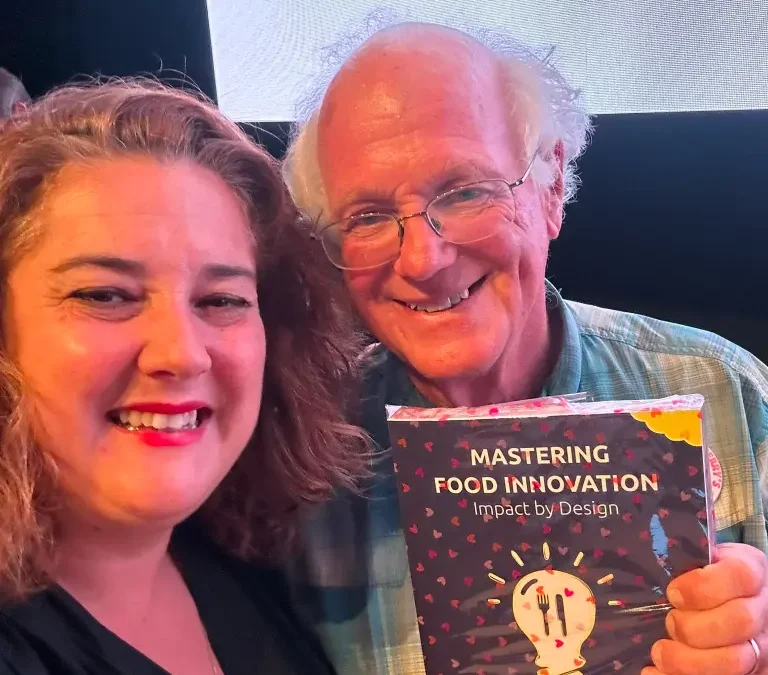
The Most Powerful Ingredient of Ben & Jerry’s Was Never the Ice Cream…
Juli 2026
Article Mary van Hoek-Hendriks
The iconic ice cream brand Ben & Jerry’s was founded in exactly the same year I was born. After surviving their very first harsh Vermont winter Ben Cohen and Jerry Greenfield celebrated their first anniversary by giving away free ice cream to everyone in town. That spontaneous gesture of gratitude evolved into what the world as Free Cone Day. Looking back, it feels like the perfect symbol of what Ben & Jerry’s was always meant to be: a company built around generosity, community and the belief that business should create happiness far beyond financial profit.
Welcome to Eindhoven, Ben!
Today, Ben Cohen visited my hometown of Eindhoven. He did not arrive as the successful entrepreneur who co-founded one of the world’s most recognisable food brands, nor as the businessman who sold his company. He walked onto the stage as an activist. His message was simple, powerful and impossible to ignore: be rebellious and use your voice.
His argument was that the world will not become a better place because governments suddenly make better decisions or because large corporations discover their conscience overnight. Real change happens when entrepreneurs decide that their businesses should stand for something bigger than the products they sell. According to Ben, mission-driven companies have both the opportunity and the responsibility to speak up, to challenge the status quo and to contribute to solving society’s biggest challenges instead of quietly adapting to them. As he shared stories about opening the very first scoop shop, the difficult decisions, the resistance they encountered and the countless mistakes they made along the way, one lesson kept resurfacing. Success is never a straight line. The road to success is paved with failures. It is built on persistence and the willingness to keep going when things do not work out the first time. Every setback simply becomes another ingredient in the story.
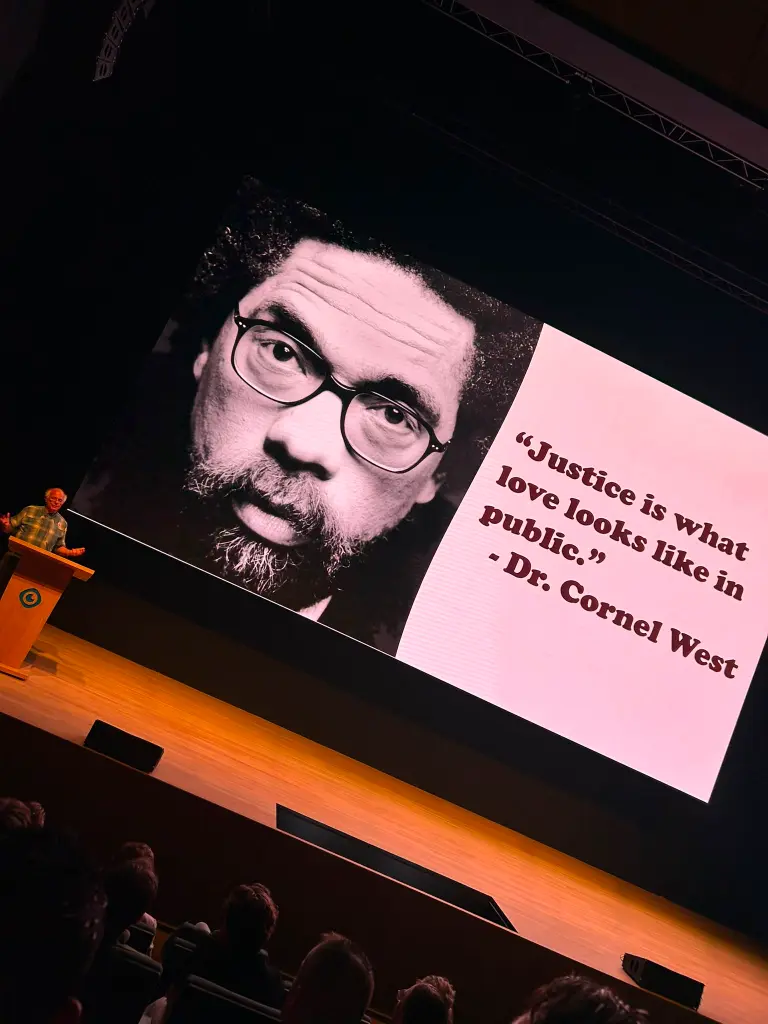
What resonated with me most, however, was something much deeper than entrepreneurship. Ben showed how naturally his own personal beliefs became the foundation of the company itself. There was never a distinction between the values of the founder and the values of the brand. They were one and the same. That is what authenticity really means. It is not something you invent in a marketing department or capture in a beautifully designed purpose statement. It is the direct reflection of the people behind the company. Perhaps that is exactly why Ben & Jerry’s became such an iconic brand. It was never just about premium ice cream with outrageous flavours and oversized chunks. It had a heart. It had convictions. It had a soul. Or perhaps I should say, it had one.
What Happened? The Simplified Version…
Watching Ben dedicate so much of his time and energy to trying to free Ben & Jerry’s from its current corporate structure is genuinely inspiring. He is not fighting because he wants to own the company again. He is fighting because he believes the brand has lost the freedom to be what it was originally created to be.
When Unilever acquired Ben & Jerry’s in 2000, the founders negotiated an extraordinary agreement. Unlike almost every other acquisition, the contract included an independent board that would continue safeguarding the company’s social mission and core values, even after ownership transferred to Unilever. For years, this unusual governance model worked remarkably well and became a textbook example of how a purpose-driven brand could survive inside a multinational corporation.
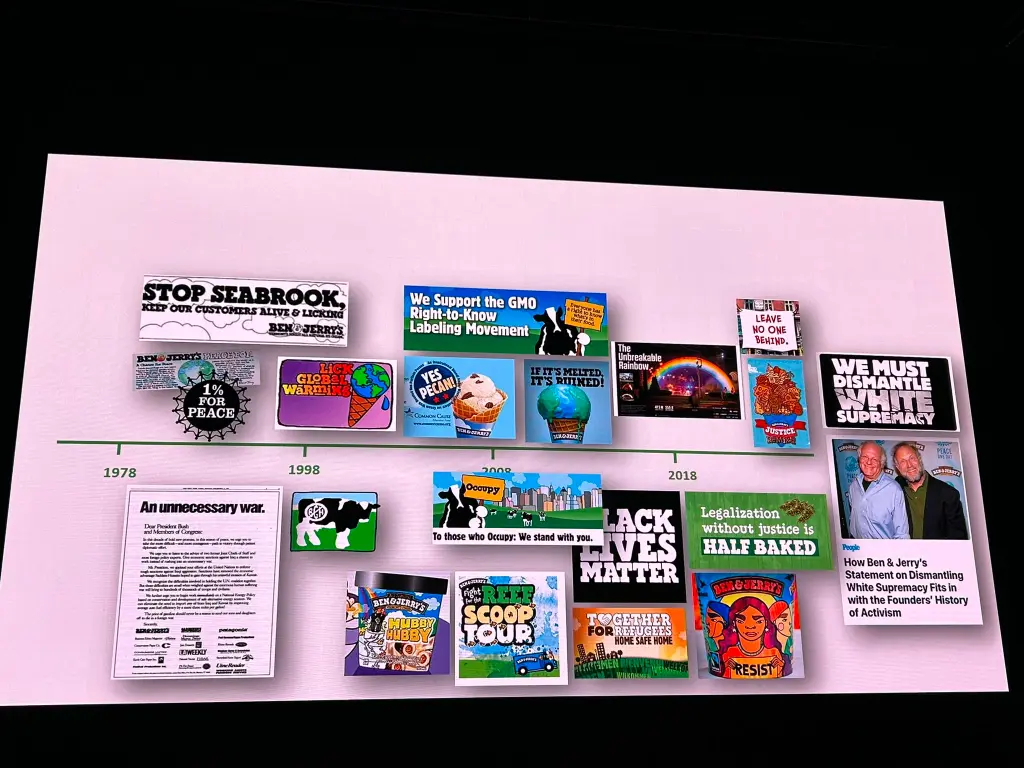
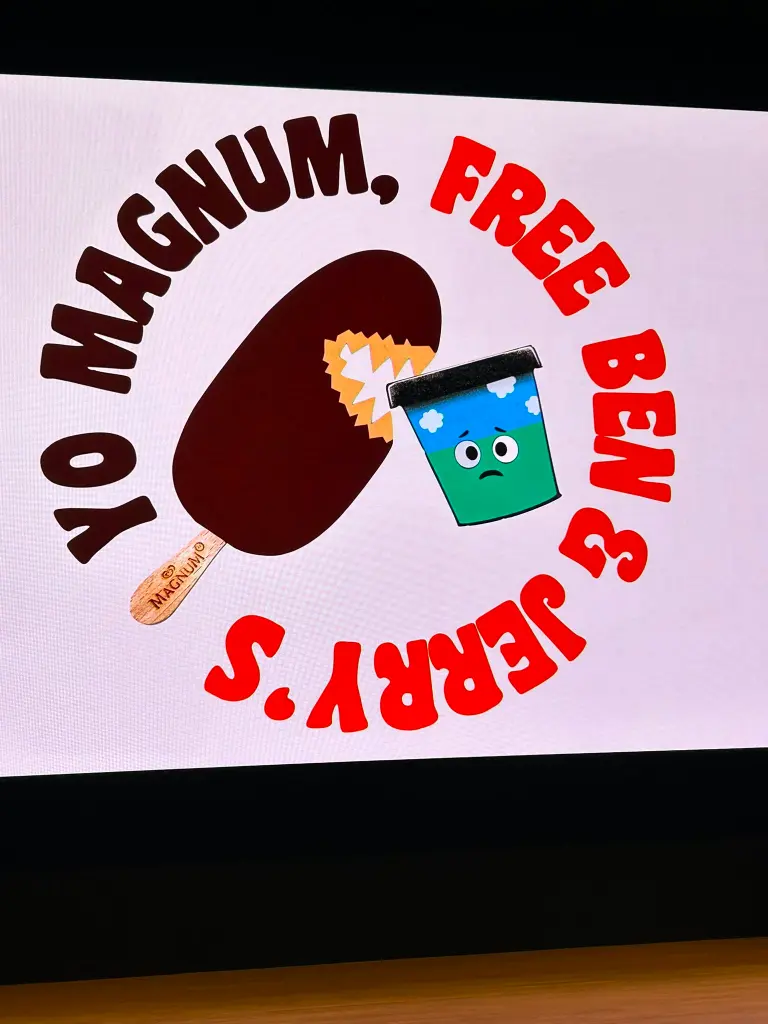
That changed in 2025, when Unilever separated its global ice cream business into a new company, the Magnum Ice Cream Company. According to Ben Cohen and members of the independent board, the governance structure that had protected Ben & Jerry’s mission was fundamentally altered, the authority of the board was weakened and, eventually, the independent directors were pushed aside. Ben explains his perspective extensively through a series of videos on social media, in which he argues that the brand’s independence, its freedom of expression and ultimately its mission have all been compromised. Ben’s fun barricade movies.
Should We Boycott Ben & Jerry’s?
Surprisingly, Ben’s answer is no. He explicitly asks consumers not to stop buying Ben & Jerry’s. A boycott would only reduce sales, weaken the brand’s position on supermarket shelves and ultimately decrease its value. Instead, he encourages people to support campaigns aimed at restoring the company’s original governance model and giving the brand back the independence that made it unique in the first place. What struck me throughout his presentation was the incredible combination of activism, humour and optimism. Ben demonstrates that one of the most powerful tools any company possesses is not its advertising budget, its distribution network or even its product portfolio. It is its voice.
Turning packaging into a communication platform rather than merely a sales tool. Packaging can be far more than something that protects a product. It can become a medium that educates, inspires and mobilises people. Companies often underestimate how powerful their own packaging can be when they dare to advocate instead of simply advertise.
Boycotting Ben & Jerry’s won’t save the brand. It will only reduce sales, cost shelf space and weaken the very company we’re trying to free.
Customers as Part of Your Creative Team
Ben & Jerry’s has influenced the food industry in another remarkable way that relatively few people know about. Ben lives with anosmia, the loss of the sense of smell. Because smell contributes significantly to our perception of flavour, he can hardly distinguish tastes. Texture, however, remains an important sensory experience for people with anosmia. That is precisely why Ben & Jerry’s became famous for its generous chunks of chocolate, cookies, brownies and fruit. Those chunks were not created as a clever marketing trick. They originated from a genuine human need. The recipes themselves were also intentionally developed with strong, bold flavours so that Ben could at least experience some distinction during tasting sessions while Jerry developed new recipes in the kitchen. What many consumers simply perceived as indulgent ice cream was, in reality, an elegant example of inclusive product design long before anyone used that terminology.
Ben & Jerry’s was also one of the very first food brands to actively involve consumers in product development. Through an online platform, fans could submit new flavour ideas and vote for their favourites, allowing customers to become genuine contributors to the innovation process. Today, co-creation has become standard practice across the food industry, but Ben & Jerry’s was one of the pioneers that demonstrated the enormous creative potential of inviting consumers into the innovation journey. Ben’s personal favourite flavour remains Cherry Garcia, introduced in 1987 as the very first ice cream flavour ever named after a celebrity. Inspired by Jerry Garcia, the legendary guitarist of the Grateful Dead, the combination of cherry ice cream, real cherries and dark chocolate chunks went on to become one of the brand’s most successful flavours.
Back to the Barricades
As Ben concluded his presentation in Eindhoven, he once again called on entrepreneurs to help free Ben & Jerry’s. Through petitions, social media campaigns and an endless stream of witty activist videos, he continues to mobilise supporters around the world. Before leaving the stage, he handed out stickers carrying a simple instruction: Stick them wherever they need to stick. Among everything Ben shared this morning, one question continued to echo in my mind.
“Are you courageous enough to stand up for what you believe in, or are you too afraid of losing business?”
That question extends far beyond Ben & Jerry’s.
It is a question every founder should ask themselves.
Every innovator.
Every CEO.
And every company that proudly claims to have a purpose.
Stand Up
Free Ben & Jerry’s: https://freebenandjerrys.com/
Ben’s fun barricade movies: https://www.instagram.com/yobencohen/
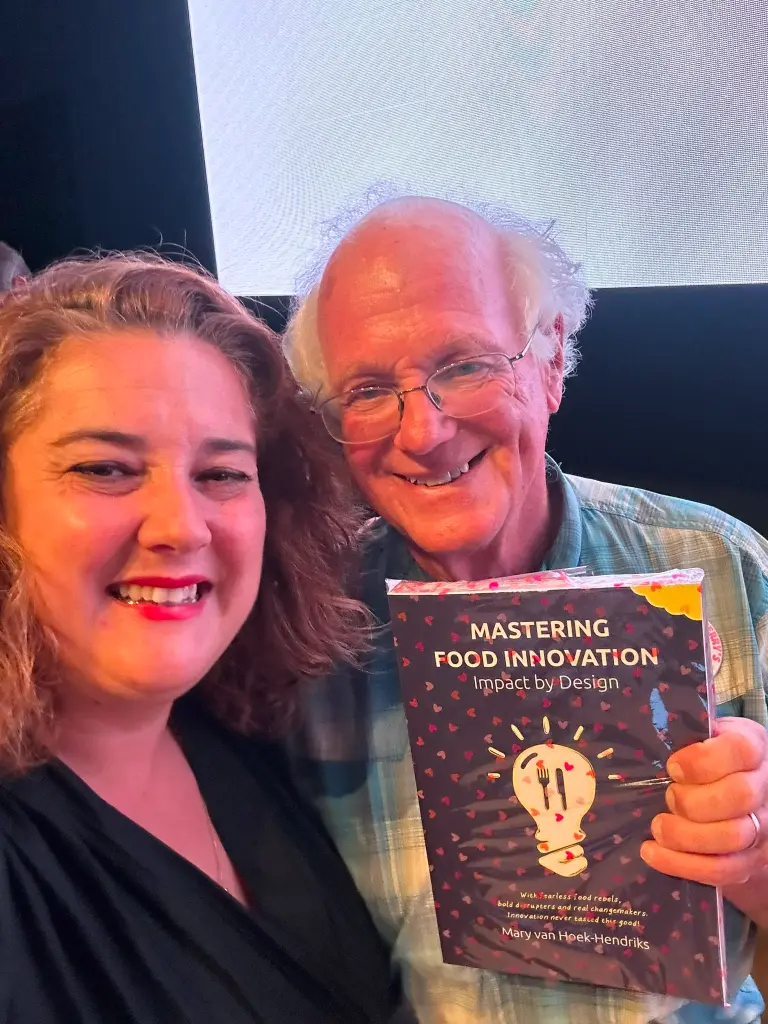
Ben & Jerry’s as part of Mastering Food Innovation: Worldwide https://a.co/d/03INfM0r Netherlands: https://startafoodstory.com/mastering-food-innovation/
Ben Cohen was speaking in Eindhoven on July 7 2026 during the I-Team Global Summer Event at The Discovery Experience.
Mary van Hoek-Hendriks wrote about the unique way Ben & Jerry’s involves their consumers as part of the creative team in the Food Innovation Journey in Mastering Food Innovation – Impact by Design.
Mary@startafoodstory.com